Call913.897.9200
As one of the leading laser vision correction centers in Kansas City, Cavanaugh Eye Center is dedicated to offering the most extensive range of exceptional eye care treatments available. We strive to serve as a comprehensive treatment facility for patients who wish to restore clarity and focal power to vision that has deteriorated with age. Our state-of-the-art surgical center allows esteemed ophthalmologist, Timothy B. Cavanaugh, to produce consistently superior results for his patients, whatever their visual needs. Through his unique talent for customizing and combining procedures, Dr. Cavanaugh is able to meet and often exceed the expectations of his patients, including those with challenging, complex vision problems.
In addition to LASIK, NearVisionCK®, and Refractive Lens Implants, the Cavanaugh Eye Center proudly offers a number of other treatment options, including:
Corneal Transplants
As a John's Hopkins fellowship trained corneal specialist, Dr. Timothy B. Cavanaugh distinguishes himself from most other laser eye surgeons by being able to perform corneal transplants for patients with corneas that have been damaged by disease, trauma, or heredity. For patients who are unable to rectify serious vision loss through glasses, contact lenses, or other corneal surgeries, corneal transplants may be the only effective solution. A corneal transplant involves the removal of the diseased central portion of the cornea, which is replaced by a clear donor cornea. This donor cornea is received from an eye bank and has been scrupulously tested for the HIV/AIDS virus and Hepatitis B and C. Patients may have to wait for donor corneas to become available. Once Dr. Cavanaugh has submitted a request, the eye bank will notify him of the availability of corneal tissue at the time of the scheduled surgery.
Approximately 36,000 corneal transplants are performed each year in the United States. The success rate of the procedure has increased dramatically in the past few years because of recent advances in research and surgical techniques. Corneal transplant operations, performed at our office, are considered to be the most successful of all organ transplant surgeries.
If you are a candidate for a corneal transplant, Dr. Cavanaugh will explain in precise detail how to prepare for the surgery and what to expect following transplantation. Although it may take between three months and a year to achieve best possible vision, corneal transplantation affords many patients who believed they would always suffer from poor vision the opportunity to see clearly again.
What Is The Cornea?
The cornea is the clear outer covering of the eye over the iris (the colored part) and the pupil. It is often referred to as the “window of the eye”. The cornea acts as the eye's first curved focusing structure and has 2/3 of the focusing power of the eye. Since light is first passed through the cornea, it is necessary to have both a clear and a smooth cornea for us to see well.
The cornea has 5 main layers and disease can occur
in any or all of the 5 layers.
From outside to inside these layers include:
Who Needs A Corneal Transplant?
Vision will be blurred or reduced if the cornea becomes cloudy, swollen and/or scarred. This occurs as a result of injury, degeneration, infection or inherited dystrophy.
Examples of such conditions are:
How Do We Obtain Your Donor Cornea?

Click here to visit Hearthland Lions Eye Banks.
In the Midwest, we are fortunate to have an excellent Eye Bank system. The Heartland Lion's Eye Bank Network brings eye banks in 4 states together to supply the corneal tissue needs of our patients. As a past Medical Director of the Kansas City Eye Bank, Dr. Cavanaugh was instrumental in helping forge this alliance. Because of this network and our close relationship with the Eye Bank, we are now able to schedule corneal transplants like any other surgery and there is generally no waiting list.
The Kansas City branch of the Eye Bank recently began functioning as the DSAEK tissue processing center for the entire Midwest. Dr. Cavanaugh was asked to oversee the training and certification of the technicians and the new state of the art tissue preparation facility. In this facility, the donor cornea is split with an instrument called a microkeratome so that only the posterior (back) layers can be transplanted.
Your donor cornea is received through the Eye Bank from a person who has recently passed away. This person's family has decided to allow their loved one to continue living by donating usable tissue. You may receive a cornea from a local donor or an out-of-state donor. All tissue is tested for the HIV/AIDS virus, and Hepatitis B and C. Strict screening criteria must be met before tissue qualifies for transplantation. When the eye bank receives the corneas, they call the doctors who have patients scheduled for surgery within the next few days and notify them of tissue availability. If Dr. Cavanaugh is unable to acquire suitable tissue for you, one of his staff will call you and reschedule your surgery for later. If you do not hear from our office, your surgery will proceed as planned.

DSAEK: Cornea Transplants Revolutionized
Descemet's Stripping Automated Endothelial Keratoplasty (DSAEK)
An exciting new procedure known as DSAEK is creating excitement for our cornea patients at Cavanaugh Eye Center and is revolutionizing corneal transplantation. Until recently, corneal disease patients had very few treatment choices to regain clear vision. The most likely option was a full thickness corneal transplant – a complicated procedure that surgically replaces the entire cornea from front to back with a donor cornea.
The DSAEK technique involves peeling off only the inner 2 layers of your cornea ie Descemet's Membrane and Endothelium. This allows replacement of the diseased posterior or inner layers of your cornea while preserving the remaining healthy cornea. In this way, patients retain 80% of their natural cornea and replace only the 20% that is diseased. The back surface of a donor cornea is then folded and inserted through a small incision into the front fluid chamber of the eye. Once inside, the donor is carefully unfolded and floated up against the back of your cornea with an air bubble. The donor cornea typically adheres to your cornea without the need for sutures.
DSAEK is only for selected patients with Fuch's Dystrophy or other disorders involving the endothelial or inner layer only. This procedure can only be performed after patient has undergone cataract and or clear lens extraction with intraocular lens implant surgery.
“We're excited about DSAEK at Cavanaugh Eye Center,” says Dr. Cavanaugh. “Rather than facing a potential one-year recovery period, the healing time and vision recovery is only 2-3 months for DSAEK patients.”
Advantages and Disadvantages of DSAEK Surgery
After DSAEK, one's prescription for glasses may be similar to what it was prior to surgery. However, after standard corneal transplantation, patients can end up with large changes in the amount of astigmatism, nearsightedness or farsightedness, compared to what they had before.
In some cases, sutures can lead to problems with infection or irritation to the eye after standard corneal transplantation. These problems should be greatly reduced or eliminated with DSAEK.
DSAEK does NOT prevent doing a full thickness transplant at a later date if needed. It allows a safer, more conservative procedure first with conversion to the more invasive procedure subsequently if necessary.
What is a Full Thickness Corneal Transplant?
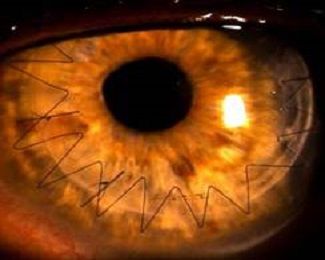
PK or Penetrating Keratoplasty is a full thickness corneal transplant. In this surgery all 5 layers of the central 8-9 mm of the normally 12 mm diameter cornea are removed using an instrument like a “cookie cutter” called a trephine. The diseased cornea is replaced with a clear donor cornea cut with a trephine of the same or similar size. The new donor cornea is held into place by numerous sutures…most times the equivalent of 24 fine sutures. This technique is best for conditions that involve clouding throughout the entire cornea or for conditions such as keratoconus where the cornea's shape is severely distorted. This outpatient procedure generally takes between 30 and 60 minutes to perform but healing can take up to a year with a delay in recovery of best vision. Since an incision is made through the entire cornea, the strength of the eye is compromised and the eye is more vulnerable to trauma or injury.
Intacs®

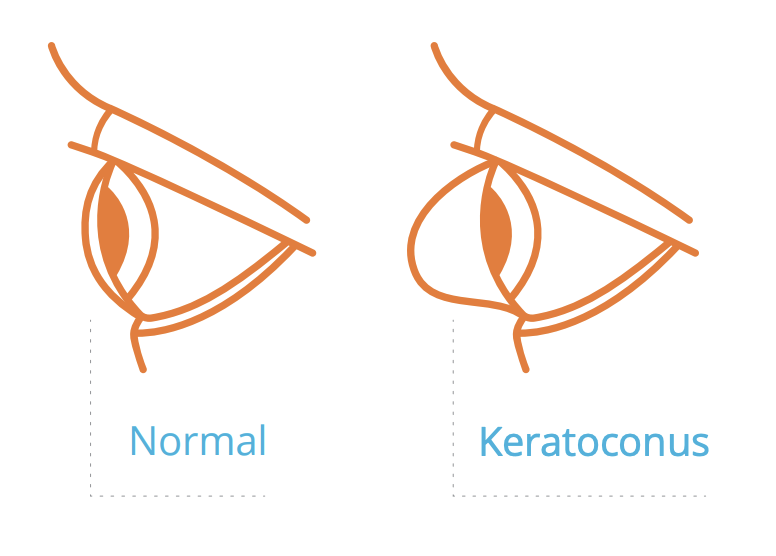
Safe and removable, Intacs® are prescription inserts that may be a suitable alternative for patients who suffer from keratoconus, a disease that results in a progressive thinning of the cornea, and have difficulty wearing traditional contact lenses. In general, such patients will eventually require a corneal transplant; however, Intacs® often delay the need for the procedure. In the meanwhile, most patients fitted with Intacs® experience improved functional vision, occasionally without the need for contact lenses or glasses.
During a brief procedure, Intacs® are implanted into the periphery of the cornea which reshapes the architecture of the cornea, giving it a more natural dome-like shape, which improves your vision. Following insertion of Intacs®, a microscopic suture (thinner than a human hair) is used to close the incision.
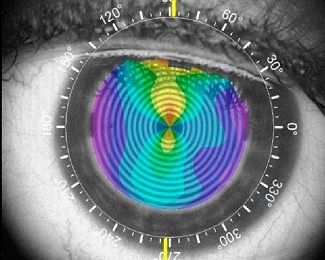
What is Keratoconus?
The treatment approach to keratoconus follows an orderly progression from glasses to contact lenses to Intacs or corneal transplantation. Glasses are an effective means of correction mild keratoconus. As the cornea steepens and becomes more irregular, glasses are no longer capable of providing adequate visual improvement. Corneal transplant surgery is indicated when a patient cannot wear contact lenses for an acceptable period of time or when the vision, even with contacts, is unsatisfactory. Over 90% of corneal transplants are successful with the majority of patients obtaining vision of 20/40 or better afterwards with either glasses or contact lenses.
A gas permeable contact lens or Synergeyes hybrid contact lens is a highly effective way to manage keratoconus and many cases can be managed this way indefinitely. If the cornea becomes too scarred or painful, or vision is too poor even with a hard contact lens, a corneal transplant may be necessary.
Phakic Lens Implants “Implantable Contact Lenses” (ICL)
- Featuring the Staar and Verisyse™ Lenses
Unlike refractive lens implants, phakic intraocular lenses (IOLs) do not replace the eye's natural lens but rather supplements it. Phakic IOLs, such as the revolutionary Staar Visian ICL and Verisyse, are often ideal for patients over 21 who are extremely nearsighted and wish to eliminate their dependence on contact lenses or thick glasses. The Staar and Verisyse micro lenses provide sharp, high-definition vision and are particularly useful for patients who are not able to achieve improved near vision through custom LASIK. Because phakic IOLs are fixed into the eye and can only be removed by a doctor, they are more convenient and easier to maintain than traditional contact lenses. The procedure of implanting the lenses requires only about 15 to 30 minutes per eye, and improvements to vision are immediate.
Phototherapeutic Keratectomy (PTK)
Some people cannot see well, even with glasses or contacts, because of corneal irregularities from corneal dystrophies or scars. Phototherapeutic Keratectomy (PTK) is a procedure that uses an excimer laser to remove haziness and irregularities from the cornea. The cornea is first outer layer of the eye that focuses light directly on the retina. It is normally clear and smooth. If the corneal surface is rough or cloudy, light focuses poorly on the retina resulting in blurry, inconsistent vision. With the advent of this procedure corneal transplants can be delayed or avoided altogether for some patients.
Using a laser in this procedure provides a greater degree of predictability and accuracy than with conventional treatments. The laser is also able to create a smoother corneal surface than a blade while removing more exact amounts of tissue, leaving the cornea as smooth and clean as possible.
Limbal Relaxing Incisions (LRI)
If appropriate, Dr. Cavanaugh may perform limbal relaxing incisions (LRI) to treat low to moderate degrees of astigmatism in conjunction with cataract surgery. Dr. Cavanaugh makes small relaxing incisions at the very edge of the cornea (in the limbus), which restores the cornea to a more spherical shape when it heals reducing visual distortions associated with astigmatism and potentially improving the patient's uncorrected vision. LRI is one of several procedures Dr. Cavanaugh can combine with laser vision correction procedures and cataract surgery as part of a comprehensive vision restoration plan.
Pingueculae and Pterygium Removal
Pinguecula
Pingueculae are yellowish, slightly raised lesions that form on the surface tissue of the white part of your eye (sclera) close to the edge of the cornea. They are typically found in the open space between your eyelids which also happens to be the area exposed to the sun. While pingueculae are more common in middle-aged or older people who spend significant amounts of time in the sun, they can also be found in younger people and even children — especially those who spend a lot of time in the sun without protection such as sunglasses or hats.
Treatment of Pinguecula
Pinguecula treatment depends on severity of symptoms. Everyone with pingueculae can benefit from sun protection for their eyes. Lubricating eye drops may be prescribed for those with mild pingueculitis to relieve dry eye irritation and foreign-body sensation, whereas steroid eye drops or nonsteroidal anti-inflammatory drugs may be needed to relieve significant inflammation and swelling.
Surgical removal of the pinguecula may be considered in severe cases where there is interference with vision, contact lens wear, or blinking.Frequently, pingueculae can lead to the formation of pterygia.
Pterygium
What exactly is a pterygium?
A pterygium is a wedge-shaped fibrovascular growth of conjunctiva (the surface tissue of the white of the eye) that extends onto the cornea. Pterygia are benign lesions that can be found on either side of the cornea.
What causes a pterygium to form?
Prolonged exposure to ultraviolet light contributes to the formation of pterygia. Pterygia are more often seen in people from southern or tropical climates, but can be found in others as well. Like sun damage to skin, Pterygium often take many years of cumulative sun exposure to develop and do not come on instantly.
What symptoms would I have FROM a pterygium?
Pterygia are often asymptomatic, and many do not require immediate treatment. However, some pterygia become red and inflamed from time to time. Large or thick pterygia may bother some people due to a persistent foreign body sensation in the eye.
What is the treatment for a pterygium?
This depends largely on the size and extent of the pterygium, as well as its tendency for recurrent inflammation. Evaluation by an ophthalmologist will help determine the most optimal treatment in each case. If a pterygium is small but becomes intermittently inflamed, your ophthalmologist may recommend a trial of a mild steroid eye drop during acute inflammatory flares. If these drops are recommended, you should remain under the care of your ophthalmologist to ensure that you do not develop side effects from the use of these medications. In some cases, your ophthalmologist may recommend surgical removal of the tissue.
When should a pterygium be surgically removed?
This will depend largely on the judgment of your physician. Removal will likely be advised if the pterygium is growing far enough onto the cornea to threaten your line of vision. A pterygium may also be removed if it causes a persistent foreign body sensation in the eye, or if it is constantly inflamed and irritating. In addition, some pterygia grow onto the cornea in such a way that they can pull on the surface of the cornea and change the refractive properties of the eye, causing astigmatism. Removing the pterygium may decrease the astigmatism.
What is involved in the surgical removal of a pterygium?
The removal may take place in a procedure room or operating room setting. The pterygium is carefully dissected away. In order to prevent regrowth of the pterygium, your ophthalmologist may remove some of the surface tissue of the same eye (conjunctiva) and suture it into the bed of the excised pterygium. Also, an anti-metabolite such as Mitomycin-C may be applied to the site. Postoperatively, your doctor may recommend some steroid eye drops for several weeks to decrease the inflammation and prevent regrowth of the pterygium.
The services listed on this page represent just a few of the exceptional treatment options we offer to our valued patients. At Cavanaugh Eye Center, we look forward to helping patients who thought they would never see clearly again find innovative, effective solutions to their vision problems. If you live in the Kansas City area, an appointment can be made at Cavanaugh Eye Center. To make an appointment, call (913) 897-9200.
Dry Eye Syndrome (DES)
We see an increasing number of dry eye patients. Dry Eye Syndrome (DES) or newly referred to as Dysfunctional Tear Syndrome (DTS), is a common condition that affects as many as 20 million people in the United States. Dr. Timothy Cavanaugh and Dr. Eric Beatty are specialists in dry eye treatment for people with mild to severe forms of dry eye. Once it is suspected that a patient has Dry Eye Syndrome, some confirmatory tests are used to aid in diagnosis and tailor a dry eye treatment specifically for your specific Dry Eye condition.
Causes of Dry Eye include:
There are many causes of dry eye but in general, the condition occurs because your eyes either don’t make enough tears or they are ineffective and evaporate from your eye’s surface too quickly. Surprisingly, one of the main symptoms of dry eye is watering of the eyes, similar to what occurs when cutting onions.
Symptoms of Dry Eye include:
Dry Eye Treatment
There are several treatments available. These range from simple lifestyle modification, artificial tears, to prescription medications depending on the severity of the condition. Artificial tears, which lubricate the eye, are commonly used to treat dry eye. Additional environmental precautions that help with dry eye include:
Punctal Occlusion has been used successfully for years in the treatment of DES. It is performed by placing small plugs in the tear drains in the eyelid. There are 4 drains total, one in each eyelid. This helps by preventing the tears from draining into the nose and thus keeping them on the eye.
To the right, there is an example of punctal occlusion. Generally the lower puncta are occluded, if the symptoms are bad enough then the top ones are also plugged:
In addition, prescribed medical treatment with anti-inflammatory medications, such as topical steroids or cyclosporine (Restasis), may lessen the chances that dry eye will progress to a more severe form. Restasis is an excellent new medication for the treatment of DES. It is speculated that chronic inflammation leads to decreased tear film production and eye irritation. Restasis acts to decrease the inflammation on the surface of the eye and help your body to produce better tears.
Other dietary supplements such as flax seed oil or Omega-3 fish oil will promote better quality tear film and may reduce the symptoms of dry eye syndrome (DES).
If you are suffering from dry eye symptoms, we’d be happy to discuss your lifestyle and the severity of your symptoms, and Dr. Tim Cavanaugh and Dr. Eric Beatty will prescribe a dry eye treatment plan to make your eyes and vision comfortable. Call us at 913-897-9200 and schedule your appointment today!
LATISSE™ is now here at Cavanaugh Eye Center!

Latisse™
Latisse™ is the first and only prescription treatment for inadequate or insufficient eyelashes that is approved by the FDA. Available only by prescription, Latisse™ can grow eyelashes longer, thicker and darker.
To learn more about Latisse, visit its web site and view before-and-after photos.
Is Latisse™ right for you?
Drs. Tim Cavanaugh and Eric Beatty will need to evaluate your medical history to determine if you are a good candidate. According to the manufacturer, you should not use Latisse™ if you have an active eye condition, including an eye infection, or have broken or irritated skin on your eyelid. And if you are using products for elevated intraocular pressure, you should only use Latisse™ after consulting with your doctor.
Common side effects include an itching sensation in the eyes and/or eye redness. This was reported in approximately 4% of patients. Less common side effects, which typically occur on the skin close to where Latisse™ is applied or in the eyes, include skin darkening, eye irritation, dryness of the eyes, and redness of the eyelids.
Dr. Tim Cavanaugh and Dr. Eric Beatty have been prescribing this medication for several years in the Kansas City and Overland Park areas. They would be happy to see you for a consultation for Latisse™ by calling Cavanaugh Eye Center at (913) 897-9200.
Visit www.latisse.com for more information.
Latisse™ FAQs
Below are some of the most frequently asked questions patients have about Latisse and their eyes. If you have any other questions, or would like to schedule an appointment, we would love to hear from you.
Dr. Tim Cavanaugh and Dr. Eric Beatty would be happy to see you for a consultation for Latisse™ by calling Cavanaugh Eye Center at (913) 897-9200.
Contact our laser vision correction center, offering LASEK and more, serving Kansas City, Johnson County, and the surrounding region.
Cavanaugh Eye Center
6200 W. 135th St., Suite 300
Overland Park, KS 66223
Click here for map and directions
P / 913-897-9200
P / 866-997-9200 Toll Free
F / 913-897-9233
The following are links to websites which are not operated by Cavanaugh Eye Center. Cavanaugh Eye Center is not associated with these websites in any way, nor does it endorse or take responsibility for any of the content. These links are here to provide you further reference and educational resource.
Cataract
Corneal Transplants
Dry Eye
Educational Institutions
Glaucoma
LASIK / Refractive Surgery
Organizations
Periodicals
Retina and Low Vision
Volunteer